Adaptive and Spatial Sound
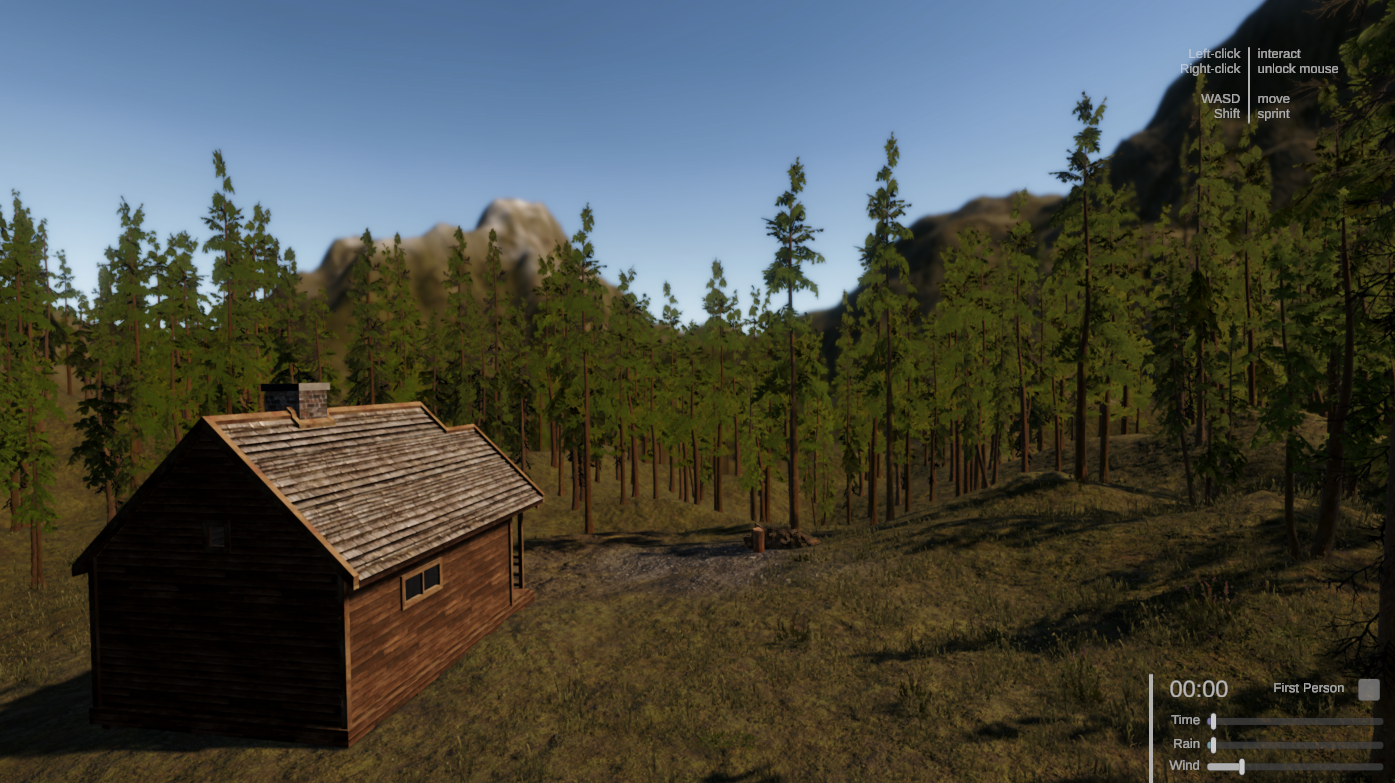
An interactive first-person scene developed for the course “Sound in Interaction,” designed to maximize player immersion within a mountain shelter environment. The prototype simulates a tranquil forest setting where the audio reacts dynamically to player actions and in-game parameters. Key interactive sound effects include: variable footsteps on different surfaces, opening/closing a door, radio music inside the hut and chopping wood (minigame). The ambient soundscape adapts to a real-time day-night cycle and changing weather conditions (wind & rain), creating a calm, slow-paced, and deeply atmospheric experience.
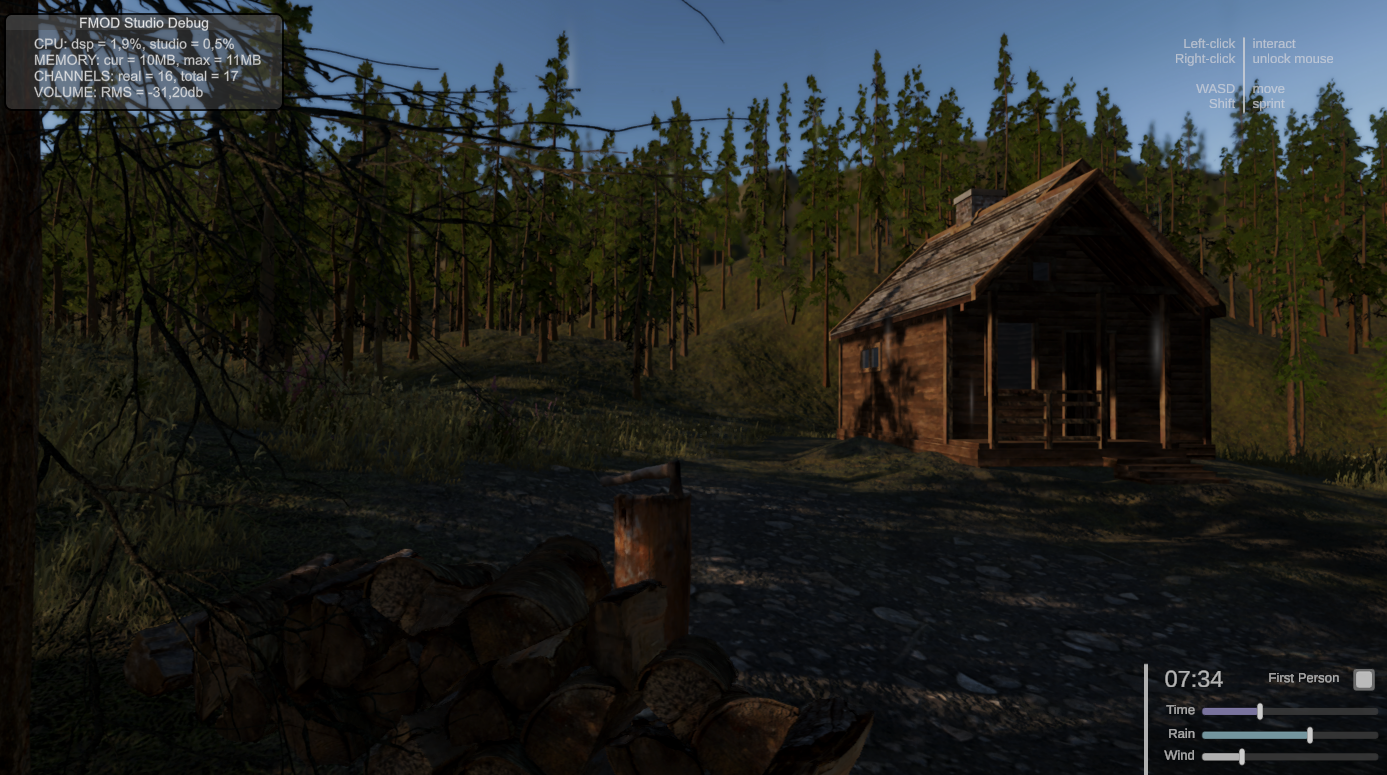
The project was built in Unity to handle game logic and player interaction, while the complex, adaptive audio was designed and implemented using the FMOD middleware. This separation allowed for powerful, data-driven sound design. To achieve a high level of spatial realism and immersion. Steam Audio was later integrated, providing physics-based sound propagation, including real-time occlusion, reverb, and HRTF-based binaural audio.